The Inspiration Behind The Hotel

Hotel Sylvia, Newport, Oregon

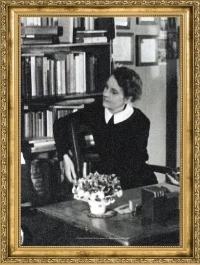
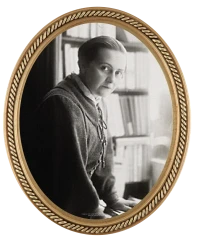
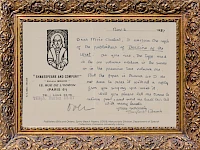
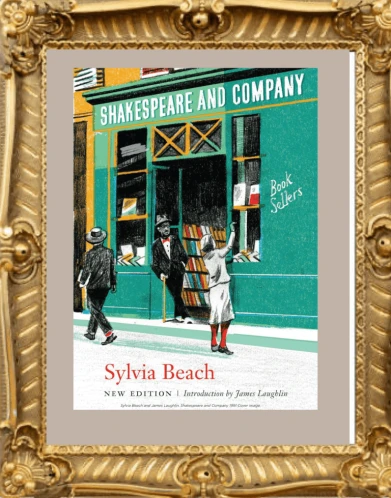
Sylvia Beach, the pioneering American expatriate and founder of the iconic Shakespeare and Company bookstore in Paris, continues to inspire Hotel Sylvia. Drawing on her commitment to fostering a sense of community within the literary and artistic circles of her time, we aim to create a space where guests can disconnect from the distractions of daily life and reconnect with themselves, their passions, and their loved ones. We aim to provide an environment that encourages meaningful relationships and heartfelt connections, much like the vibrant gatherings that once filled the halls of Beach’s legendary bookstore. At Hotel Sylvia, we strive to evoke a simpler time, where human interaction and genuine experiences of yesteryear take precedence, allowing our guests to easily unwind and rediscover the beauty of living in the moment.
1887

Sylvia’s Early Family Life

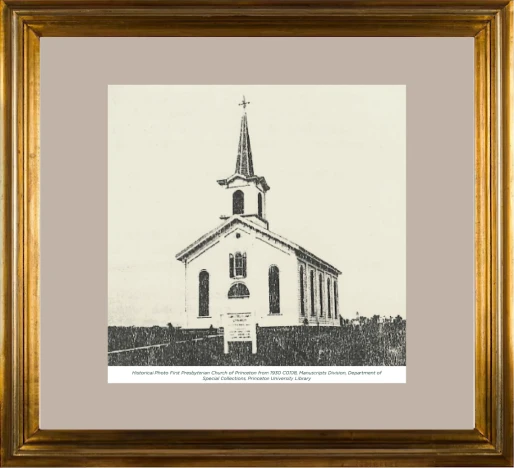
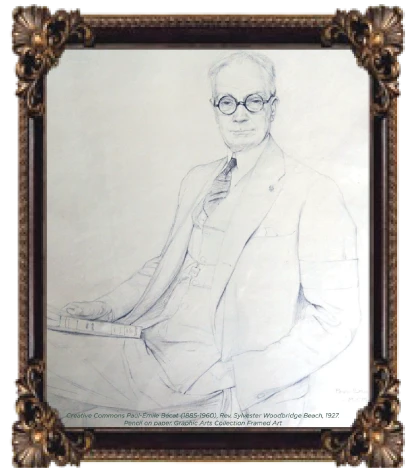
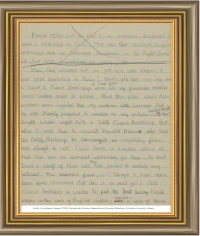
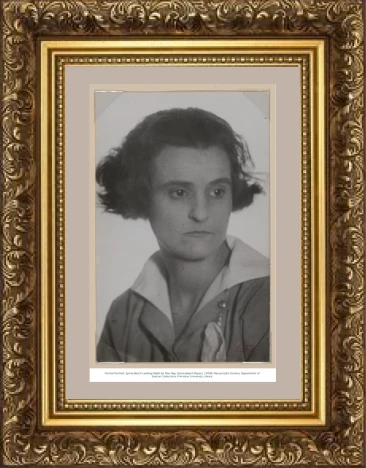
Sylvia was born in Baltimore, Maryland, on March 14, 1887, in Nancy Woodbridge Beach, after her grandmother. She later adopted her preferred name as a teenager. Raised in New Jersey, Sylvia was the middle sister of three and descended from a long line of generations of clergypersons. Her father, Reverend Sylvester Woodbridge, went to Princeton, and Rev. was a pastor at First Presbyterian Church. “Princeton, with its trees and birds, is more a leafy, flowery park than a town, and the Beach family considered itself lucky,” Sylvia wrote in her 1959 memoir. Sylvia’s mother, Eleanor Orbison, was born to missionaries in India and later moved to Pennsylvania, eventually meeting and marrying her Latin teacher and–Reverend Beach. Beach generally kept to herself, was quiet, and had little formal schooling but learned to speak French, Spanish, and Italian–fascinated by the European culture.

1901

The Parisian Beginnings

In 1901, the family moved to France upon Sylvester Beach’s new position as Assistant Minister of the American Church in Paris and the Director of the American Student Center, where the family lived until 1906.

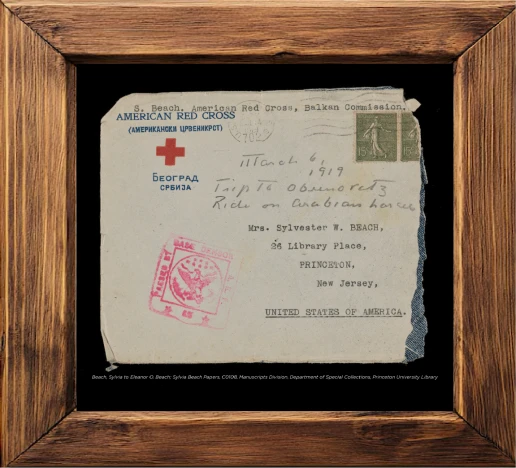
As a teen, Sylvia fell in love with the city, but eventually the family returned to New Jersey where her father became the minister of the First Presbyterian Church of Princeton. She made several return trips to Europe, lived in Spain for two years and worked for the Balkan Commission of the Red Cross, eventually returning back to Paris to study contemporary French literature.

1919

Building Literary Connections

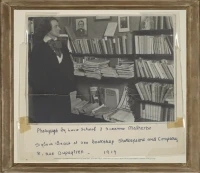
In Sylvia’s research at the Bibliotheque Nationale, the National Library of France, she read about the extensive lending library and bookshop–La Maison des Amis des Livres in rue de l’Odéon in Paris. Here, she was welcomed by the owner, Adrienne Monnier, who focused on modern literature and founded the first lending library in all of France. Beach immediately connected with Monnier and became a member of her lending library, meeting authors and attending readings. The membership helped Beach become inspired by the literary life of the Left Bank of Paris–the central hub for writers and artists during the early 20th century, and Monnier’s bookstore was a focal part of this scene promoting innovative writing.
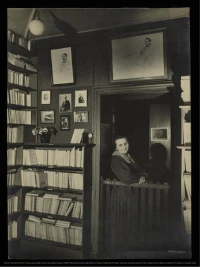
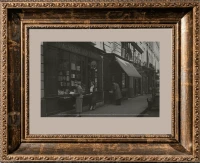
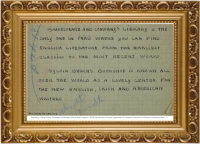
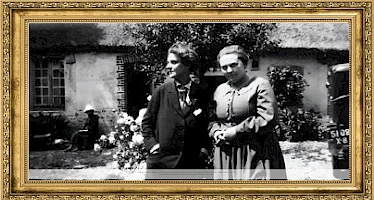
Sylvia dreamed of starting a branch of Monnier’s bookshop in New York that would offer contemporary French works to American readers. Monnier became Sylvia’s mentor, friend and eventually lover. She decided they couldn’t afford such a venture in the United States, but with rent in Paris being cheaper than the U.S. and Monnier’s help, Sylvia opened an English language bookstore and lending library called Shakespeare and Company.

1920

The Lost Generation Finds Each Other

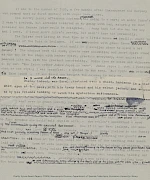
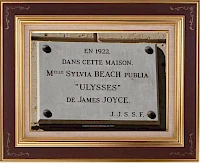
In July 1920, Beach met James Joyce, who had become a regular subscriber to her lending library; he was trying to publish his greatest work, Ulysses, with no success. Sylvia offered to edit and publish it and, with her extensive network, was able to smuggle the book into the U.S., Canada, and England through private buyers as it was considered erotica, but it flourished with her unwavering support. With its beginning success, favorable exchange rate, great timing, and unwavering support of her favorite writers, Sylvia quickly outgrew her space and, in 1921, moved to a larger storefront just across the street from Monnier. Sylvia specialized in selling books published in Great Britain and the United States and became the central focus for a generation of American, French, and British writers in Paris, including Ernest Hemingway, Gertrude Stein, Alice B. Toklas, F. Scott Fitzgerald, and many more. Beach offered hospitality, encouragement, and books for the literary talent of the time and even helped fund their efforts with loans, being their main point of contact, and even staying in one of her rooms above the shop until they were settled.

1930

The Joyce of It All

Joyce spent Sylvia’s loans and utilized all of her time and resources without consideration. However, Sylvia fervently believed in Joyce and the quality of Ulysses, so she went bankrupt publishing the book for him. This undying loyalty proved exclusively beneficial to Joyce, and after 10 years of dedication, Joyce betrayed Sylvia and sold the publishing rights of Ulysses to another publisher, which left Beach financially stranded. In reflection, Sylvia felt it was for the best as she no longer could manage the workload and her shop’s needs in tandem.

1937

Friends of Shakespeare and Company

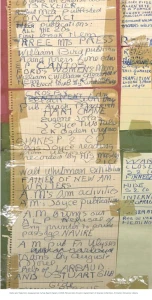
In the 1930s, there was a mass exodus of Americans from Paris, and sales dropped until Andre Gide stepped in and persuaded their literary friends of the Left Bank to subscribe as Friends of Shakespeare and Company, paying an annual membership fee. They even rallied behind Beach by asking the French government to subsidize the bookstore, and authors like T.S. Eliot and Paul Valéry held benefit readings to raise money to keep Shakespeare and Company afloat. Sylvia was made a Knight of the Legion of Honor, the highest decoration in France, for her work in nurturing writers and publishing great works of literature. She considered it one of her highest honors and even wore her ribbon proudly, at great risk, after the Germans occupied her beloved adopted homeland.

1941

The End of An Era

Paris was occupied in 1939, but Monnier and Beach remained, enduring cold winters, fuel shortages, food rations, blackouts, and censorships. On one occasion, Sylvia refused to sell a Nazi officer a book, he returned, and Sylvia enlisted her friends to move and store all her beloved books, dismantle everything, and even paint over the sign. Shortly after, she was taken to an internment camp in the first round-up of American women. Then, she was moved to another camp in Vittel, France, where she stayed until 1943. She eventually was able to return to Adrienne and their apartment, which was full of hidden books above Monnier’s shop. When the war finally ended in 1944, her old friend Ernest Hemingway ran through the cobblestone streets shouting “Sylvia,” where they eventually re-united, but despite the liberation, the bookstore never reopened.

1956

Great Love and Reflection

Monnier was diagnosed with Ménière’s disease, affecting her balance and she suffered from delusions. After 36 years of becoming lovers and living together, in 1955, she committed suicide. In 1956, Beach wrote Shakespeare and Company, a memoir of the interwar years that details the cultural life of Paris at the time, featuring first-hand observations of her beloved authors and vibrant Paris literary scene, becoming known as the author of the “Lost Generation.”

1962

Legacy & Recognition

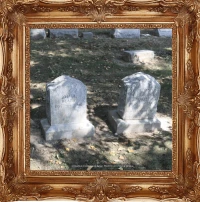
James Joyce’s legal battles and notoriety were finally recognized, and he found a way to acknowledge Sylvia’s contribution by paying homage by writing small character roles for her and her sister and mother into Ulysses and Finnegan’s Wake as well as slowly paying back his borrowed sums over the years. She was awarded accolades from her peers, publishers, and writers and even found new companionship with Camilla Steinbrugge. In June 1962, she opened the Martello Tower in Sandycove in Dublin (where the opening scene of Ulysses is set) as a museum. She remained in Paris until her death in 1962 and was buried in Princeton Cemetery. Her papers are archived at Princeton University.
American George Whitman opened a new bookshop originally called Le Mistral but renamed Shakespeare and Company in 1964 in honor of the late Sylvia Beach. Since his death in 2011, it has been run by his daughter Sylvia Whitman.

Our Core Values

The Fundamental Beliefs Of Hotel Sylvia

A doodle shows a watering can sprinkling water onto a plant with heart-shaped leaves, representing nurturing or growth in love.

Growth

Hotel Sylvia invites guests to rediscover themselves—through journaling, reflection, or creative pursuits—offering space to pause, grow, and reconnect with passions in a nurturing coastal environment.
The image shows a simple line drawing of a window with curtains, featuring grid-like panes and two drapes on each side, depicting a classic design.

Serenity

We provide a peaceful escape from daily distractions, encouraging relaxation, mindfulness, and inner calm. Hotel Sylvia is designed to inspire stillness and clarity through quiet surroundings and thoughtful spaces.

Four stylized hands are interlocked, forming a square design, symbolizing unity and cooperation.

Community

Rooted in a creative legacy, Hotel Sylvia welcomes writers, readers, and dreamers to gather, share, and connect. Our space fosters belonging, conversation, and mutual inspiration for every guest.


This image features a stylized geometric network diagram with a central circle connected to outer nodes, resembling a molecular structure.

Curiosity

Inspired by Sylvia Beach’s literary spirit, we encourage exploration and creative freedom. Hotel Sylvia is a haven for inquisitive minds to reflect, imagine, and embrace the unknown without boundaries.

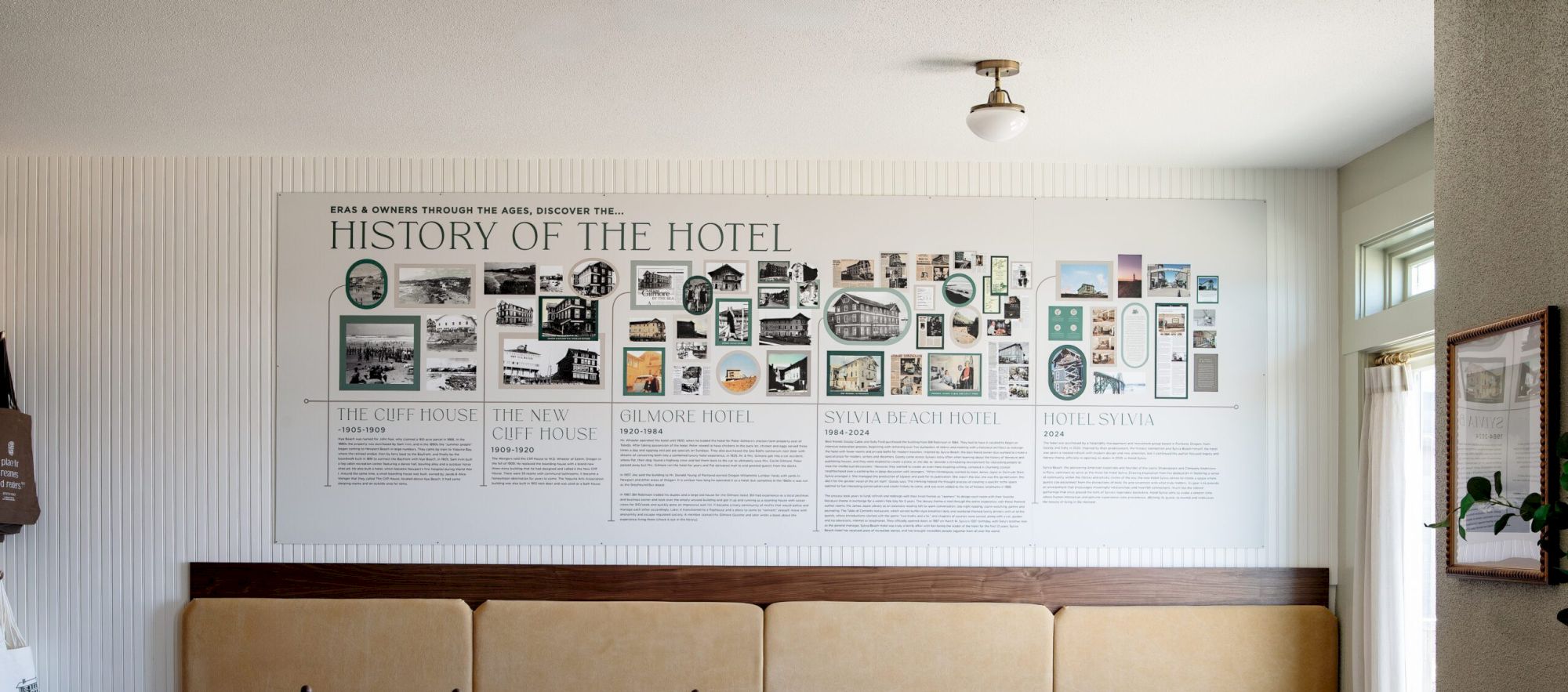
    History Of The Hotel

    Eras & Owners Throughout The YEARS, Discover The…

    1905 - 1909

    The Cliff House

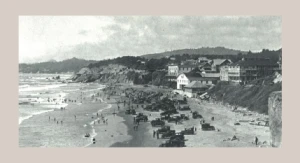
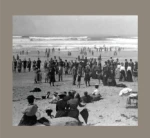
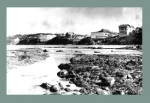
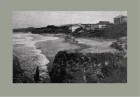
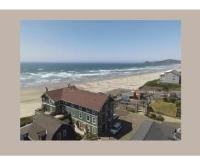
    Nye Beach was named for John Nye, who claimed a 160-acre parcel in 1866. In the 1880s, the property was purchased by Sam Irvin, and in the 1890s, the “summer people” began coming to Newport Beach in large numbers. They came by train to Yaquina Bay, where the railroad ended, then by ferry boat to the Bayfront, and finally by the boardwalk built in 1891 to connect the Bayfront with Nye Beach. In 1905, Sam Irvin built a log cabin recreation center featuring a dance hall, bowling alley, and an outdoor horseshoe pit. He also built a hotel, which became Newport’s first hospital during World War I. Around the same time, a small boarding house owned by Jacob & Alice Wenger was built. They called it “The Cliff House,” and it is located above Nye Beach. It had some sleeping rooms and an outside area for tents.

    1909 - 1920

    The New Cliff House

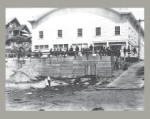
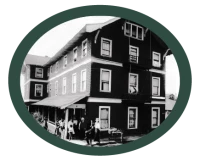
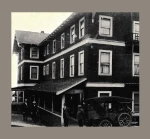
    The Wenger’s sold the Cliff House to W.D. Wheeler of Salem, Oregon in the fall of 1909. He replaced the boarding house with a brand new 3-story building that he had designed and called it the New Cliff House. There were 39 rooms with communal bathrooms. It became a honeymoon destination for years to come. The Yaquina Arts Association was also built in 1913 next door and was used as a bath house.

    1920 - 1984

    Gilmore Hotel

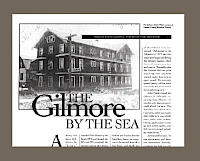
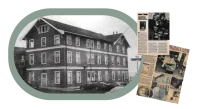
    Mr. Wheeler operated the hotel until 1920 when he traded it for Peter Gilmore’s chicken farm near Toledo. Peter, embracing the swap, vowed to serve chicken and eggs daily, with eggnog and pot pie on Sundays. The Gilmores also bought the neighboring Sea Baths sanitarium, dreaming of a luxury hotel experience. In 1929, a car accident left Mrs. Cecile Gilmore trapped—until their dog Pat found help and saved her life. Peter passed soon after, but Cecile ran the hotel for years, with Pat delivering mail and greeting guests. In 1957, she sold it to Donald Young of Oregon Willamette Lumber. By the 1960s, it was a Greyhound Bus depot. In 1967, Bill Robinson traded the property for the building, reopened it as a $10/week rooming house, and fostered a community of self-governing misfits. Later, it became a haven for reinvention—spawning the Gilmore Gazette and, eventually, a book.

    1930 - 1937

    Sylvia Beach Hotel

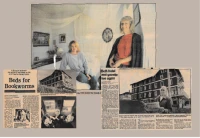
    In 1984, best friends Goody Cable and Sally Ford bought the building from Bill Robinson and began restoring it—clearing five dumpsters of debris and working with a historical architect. Inspired by Sylvia Beach, they envisioned a haven for readers, writers, and thinkers to gather in deep conversation around a crackling fire. “Sylvia arranged it. She managed the production of Ulysses and paid for its publication, but she wasn’t the star; she was the go-between. She did it for the greater vision of the art itself,” Goody said of Beach, who supported greats like Hemingway and Joyce. Declared a historic landmark in 1986, they invited friends to design author-themed rooms in exchange for week-long stays. The hotel opened on March 14, 1987—Sylvia’s 100th birthday—with Sally’s brother, Ken, as General Manager. Today, it remains a beloved literary landmark and soulful sanctuary for curious minds from around the world.

    2024

    Hotel Sylvia

    In 2024, Goody and Sally passed the torch, selling the hotel to a Portland-based hospitality group. Honoring the legacy of its founders and namesake, the new stewards refreshed the space with thoughtful design updates and modern amenities—while preserving the hotel’s literary soul. In 2025, it reopened as Hotel Sylvia. Still inspired by Sylvia Beach—the trailblazing American behind Shakespeare and Company in Paris—the hotel remains a haven for connection, creativity, and slow living. Like Sylvia’s own gatherings of great thinkers and artists, Hotel Sylvia invites guests to step away from daily distractions and into a deeper presence. With cozy corners, conversation-rich spaces, and the spirit of the story in every detail, the hotel rekindles a time when ideas were shared face-to-face and community was everything. A stay here isn’t just about escape—it’s about remembering what truly matters.

    Our Foundation

    A Place For Readers, Dreamers & Thinkers

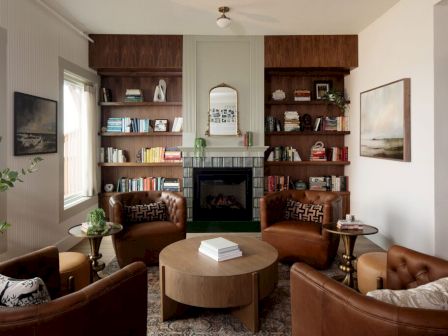
    A cozy living room with a fireplace, bookshelves, leather chairs, and a round coffee table in a warmly lit, inviting setting.

    Literary-Themed

    Inspired by old-school libraries and nostalgic spaces for creative souls to gather, our beloved guests will find thoughtfully curated spaces that nurture and encourage readers, writers, and dreamers alike. Amidst the tranquility of Hotel Sylvia, you can connect back to your roots, passions, and a simpler time. We invite you to take a moment to enjoy the beautiful surroundings, relax with a good book, and reconnect with what truly matters to you.

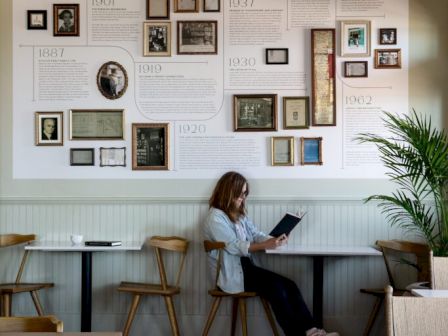
    A person sits reading in a cafe with a wall display of framed photos and text about Sylvia Beach, surrounded by wooden chairs and tables.

    Inner Growth

    Our curated spaces allow you to disconnect from everything and reconnect with yourself. We encourage our guests to slow down the pace and seek simplicity, relaxation, and a newfound perspective. Take time for passion projects, reflection, and introspection.

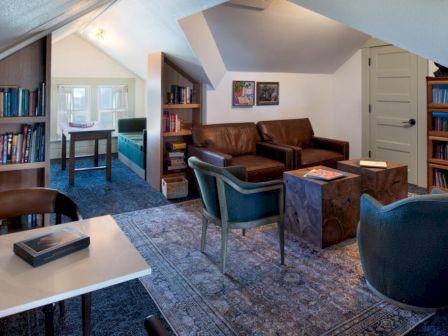
    A cozy room features leather seating, shelves, tables, and a daybed. There's warm lighting, framed artwork, and a patterned rug on the floor.

    Community Connection

    At Hotel Sylvia, we are deeply committed to curating exceptional experiences for every guest, whether you’re a passionate writer, an avid reader, an adventurous soul, or a lover of the ocean. Our uniquely inviting atmosphere fosters meaningful connections and nurtures a vibrant community within our walls and along the breathtaking coastline. Each visit unveils new inspirations and unforgettable moments, ensuring your desire to return is as strong as the Pacific Ocean’s tide.

      Have Questions About Your Stay?

      Find answers to common questions about Hotel Sylvia in Nye Beach, Newport, Oregon. Learn about amenities, check-in, parking, pet policies, and more to plan your perfect coastal stay.

      See Faqs